Pages

Showing posts with label books. Show all posts

Thursday, August 8, 2013

Book Review: Uncertainty by David Lindley


David Lindley's Uncertainty: Einstein, Heisenberg, Bohr, and the Struggle for the Soul of Science takes a different tack from many books on physic out there, focusing on the people and relationships behind the ideas rather than just trying to explain abstract ideas. Heisenberg's uncertainty principle states that there are things that cannot be measured, cannot be known for certain. This shook the science community, who were used to a world where everything could be measured and described down to the tiniest detail, as long as you had the right tools. 

Lindley does a wonderful job of explaining the complex relationships between these men, describing a close-knit, small profession full of people spread across several countries who knew each other for decades and frequently got on each other's nerves. This insular community is also placed in the larger context of the twentieth century, showing how World War II especially had such a huge impact on the future of physics, for more than the obvious reason.         

This book was fascinating and read smoothly. It's also reasonably short - it took me a little longer than a cross-country plane ride to finish it. While the nerds amongst us will enjoy it, I think it's accessible to anyone with an interest in the topic whether they have previous knowledge about it or not. Highly recommended to anyone interested in biographies, 20th century history, or science

Find Uncertainty on Goodreads

For fun stories about physicists, read Surely You're Joking, Mr. Feynman!
For a challenge, read Brian Greene's The Elegant Universe 

Image from Goodreads.com

Wednesday, August 7, 2013

From the Bookshelf: Mysteries

I started reading mysteries when I discovered the shelf of yellow Nancy Drew books at my library when I was about 8, and haven’t stopped since. Here are some of my favorite mystery series now: 

Carola Dunn - Daisy Dalrymple Mysteries


In the wake of World War I, the Honourable Daisy Dalrymple has a tendency to trip over murder mysteries while making her living as a writer in 1920s London. There are now twenty books in the series and the most recent, Gone West, was published in 2012. Daisy is a wonderful, more grown up successor to our favorite spunky girl detective Nancy Drew. The books are fun light reading with just enough romance.


Start with: Death at Wentwater Court
See the Daisy Dalrymple series on  Goodreads 

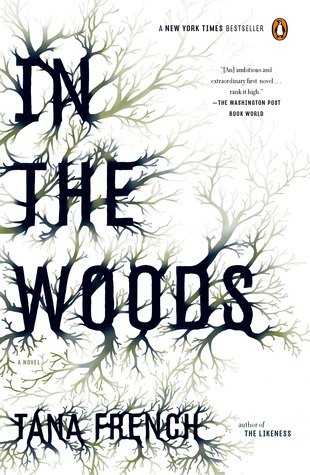
Tana French - Dublin Murder Squad


French's books are a mix of police procedural and gothic, always hinting at something unknown and uncontrollable that lurks at the edges of civilization. Rather than the usual murder-mystery formula, the books focus more on trying to figure out what happens when people find themselves in situations beyond their control. I say try, since there are always unanswered questions, even with a solved case.


Start with: In the Woods
See the Dublin Murder Squad series on Goodreads 

Dorothy L. Sayers - Lord Peter Wimsey


If you crossed Sherlock Holmes with P.G. Wodehouse’s Bertie Wooster, you might get Lord Peter. Sayers is famous both for mastering the mystery formula and putting together complicated puzzles for readers (The Nine Tailors, Five Red Herrings) and for character-driven books (especially Gaudy Night) that read more like literary novels than genre fiction. The series also includes some wonderful short stories which range from dark and twisted to silly and heartwarming. If you want predictable stories that always end neatly, these may not be for you, but if you want a book that can make you laugh, cry, and think, I dare say they are.

Start with: Whose Body?
See the Lord Peter Wimsey series on  Goodreads

All images from Goodreads.com


Monday, April 4, 2011

Book Review: The Woman in White


This book has long been on my (imaginary) List of Books I Ought to Have Read But Haven't. It's a classic in and out of its genre and I assumed it must have influenced much of what came later, but I never got to it until I pulled it off the library shelf on a whim last week. Little did I know just how far this book would exceed my expectations:
"An experiment is attempted in this novel, which has not (so far as I know) been hitherto* tried in fiction. The story of the book is told throughout by the characters of the book. They are all placed in different positions along the chain of events; and they all take the chain up in turn, and carry it on to the end...it has afforded my characters a new opportunity of expressing themselves, through the medium of the written contributions which they are supposed to make to the progress of the narrative." (Wilkie Collins, Preface to the 1860 edition of The Woman in White)
It's all told in letters and diary entries. How many novels have you read that are told in multiple first-person narratives? I mean, Meg Cabot, people. And this was the first time somebody tried this? Way to change modern literature.
And the plot. Is so. Crazy. Insane asylums, dark Secrets, forgeries, crumbling mansions, secret societies, kidnapping, poisoning, love affairs, and on and on. I really do have to read on to find out what happens next, and I've gotten pretty darn good at predicting the paths of mystery novels. Collins seems to have written this story for the sheer fun of it, and oh it shows. No wonder this book is the one mentioned on his tombstone. I read The Moonstone a while back and it was fine, but not NEARLY this dark and twisty and entertaining. My copy of The Woman in White is over 600 pages, but it still reads fast.
Also, Marian? She's smarter than most of the people in this book and reportedly has a bombshell body sans corsets (W.C. gets points for thinking that corsets are stupid), but apparently her face is "ugly" and she's all spinstery because she's all of 23 or so. She basically runs the household at Limmeridge and takes care of her pretty but bird-brained sister throughout the rest of the book, though it's hard to see what she gets out of it all. For a minute there I thought Walter might put down the torch he carried for Laura and figure out that his real partner-in-justice was really Marian. But I suppose that would be a just too much for Victorian England. The violence and corruption they could handle, but our hero falling for a smart, marginally attractive spinster? Never.
*how great a word is "hitherto"?
Vaguely Related:
2D Goggles
: Quasi-Victorian steampunk-ish hijinks
Pretty chart!
For some reason it does not mention The Woman in White, but The Moonstone appears in the area devoted to the Gothic Novel. Maybe I should go back to that book after all...
Andrew Lloyd Webber wrote a musical based on this book. I heart musicals, but I can't help feeling that this one is better off staying on the page. Also, why is it marketed as a "ghost story?"

Sunday, February 7, 2010

So it's probably just a coincidence...

...but in going over my notes for a presentation I'm giving next week (on the gothic novels referenced in Jane Austen's Northanger Abbey), I noticed something oddly familiar. The description of one of the novels (The Necromancer: or The Tale of the Black Forest by Ludwig Flammenberg, published 1794) involves the the adventures of Hermann and Helfried. Their foe is the titular Necromancer, named Volkert, who seems to have mysteriously risen from the dead in a deep, dark, European forest.

Hello, Harry and Voldemort.

I know J.K. Rowling is definitely up on her literary references, but even so this seems like a stretch. The book has only come back into print in the past thirty years and before that it was thought to be a made-up title.

But still.